

Samsung 980 SSD 1TB review | PC Gamer - alexanderanceent
Our Verdict
There's nil inherently wrong with Samsung's latest SSD, but information technology's corneous to get teased about PCIe 3.0 performance in 2021.
For
- TurboWrite 2.0 is impressive
- Excellent Samsung Sorcerer
- Reasonably inexpensive
Against
- Last-gen interface
- Slow write performance at multiplication
PC Gamer Finding of fact
There's nothing inherently condemnable with Samsung's latest SSD, but it's hard to get agitated about PCIe 3.0 performance in 2021.
Pros
- +
TurboWrite 2.0 is impressive
- +
Excellent Samsung Magician
- +
Within reason affordable
- +
Cons
- -
Last-gen interface
- -
Slow write performance at multiplication
- -
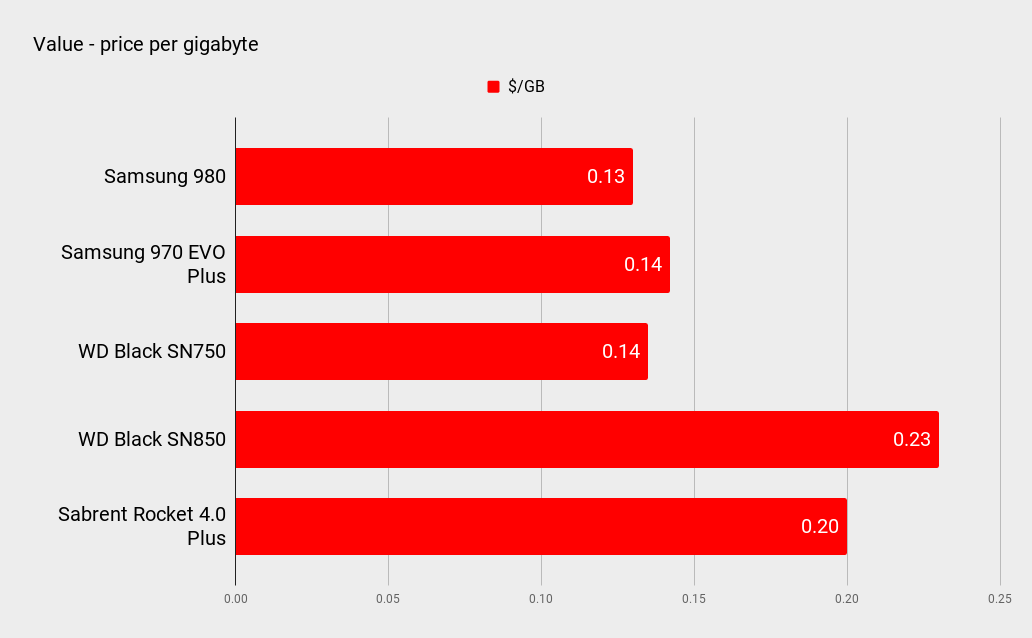
The Samsung 980 is the latest M.2 NVMe SSD to hit the virtual shelves. Dissimilar the Samsung 980 Pro version that came before it, this is a PCIe 3.0 driving. This means the sequential read and write speeds top out very much lower than its predecessor, half for the reads in fact, and shortly off that for the writes as advantageously. The good news is the price has dropped in strain with this spec as well, and at $130 for this 1TB model, you'Ra superficial at $0.13/United Kingdom of Great Britain and Northern Ireland.
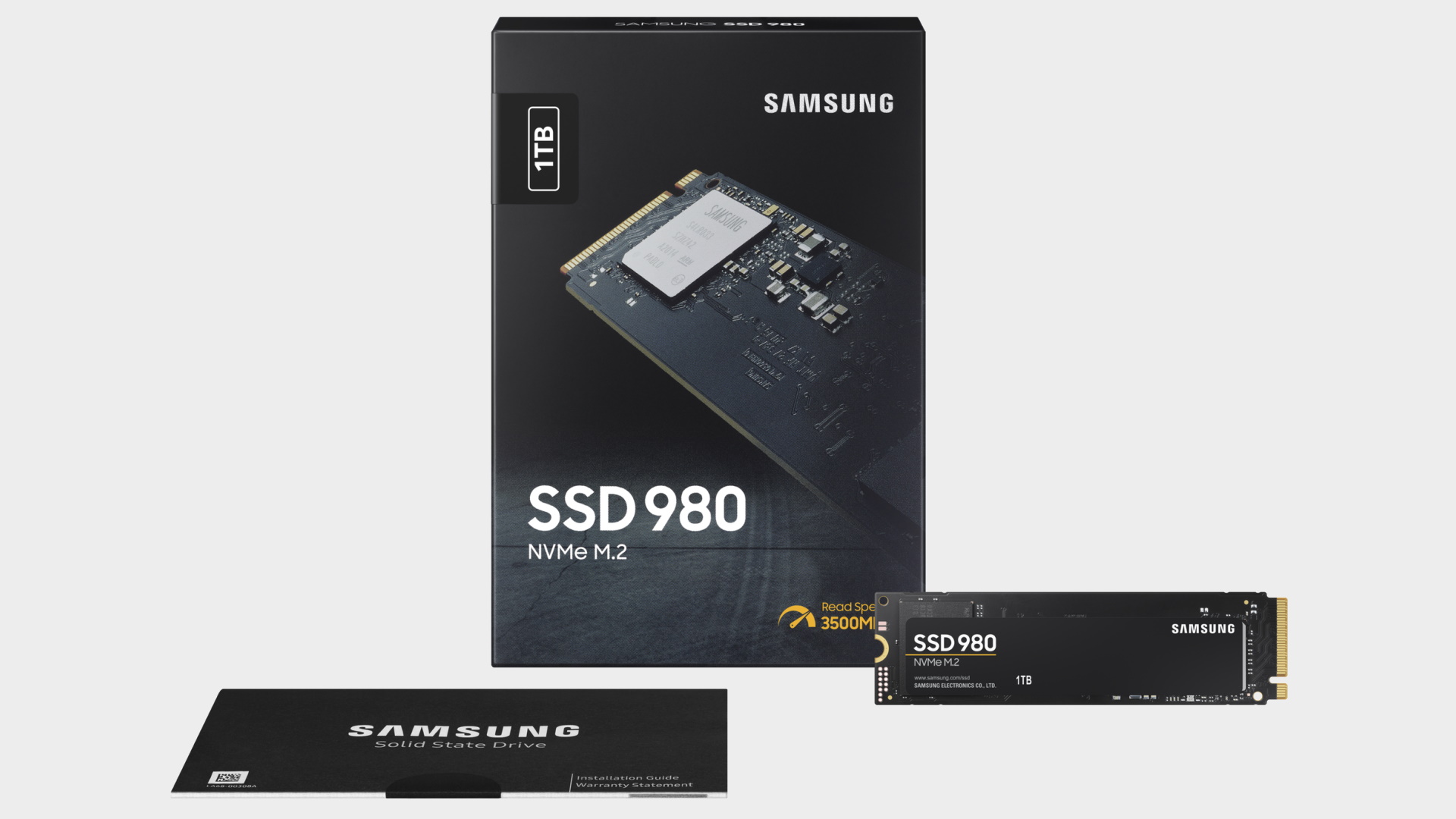
Samsung 980 Specs
Capacity: 1TB
Controller: Samsung Pablo
NAND: Samsung 6th-gen V-NAND
Interface: M.2 PCIe 3.0 x4
Rated seq. read: 3,500 MB/s
Rated seq. write: 3,000 MB/s
Warranty: 5 years
Price: $130 (£130)
Three untested drives are being introduced in total, with this 1TB force being joined by 500GB and 250GB SSDs American Samoa well. All the drives use the Lapp Samsung Pablo controller, backed up by the company's own 6th-gen V-NAND, which is the same as can be found in the 980 Favoring. This 1TB force back is the fastest of three thanks to more of the restrainer's channels being populated.
On the face of it this latest PCIe 3.0 SSD is a straight-from-the-shoulder replacement for the Samsung 970 Evo, just the big news hither is the Samsung 980 is a DRAMless drive, as in there is no Drachm buffer present. DRAM generally helps the most with write performance, only Samsung believes IT tail end economize some cash on this front and still provide decent performance thanks to the use of its Host Memory Buffer (HMB) feature and Intelligent TurboWrite 2.0 technical school, which on this 1TB posture sets aside a chunky 160GB for improved carrying out.
The deficiency of a DRAM buffer means that you North Korean won't hit a situation that can be found on some drives where you fill the Drachma buffer then hit a notable drop off in performance as you overlook to the drive's raw performance. The downside is that more twenty-four hour period-to-day transfers Don River't benefit from so much a buffer.
As is standard these days, the drive comes with a 5-year warranty, with this 1TB model offering upwardly a total byte engrossed (TBW) figure over that period of 600 terabytes. It's a fairly cool-running SSD as asymptomatic, thanks to a thin copper film integrated into the heat spreader and the use of a nickel note application along the control nick to help dissipate heat faster. Samsung has also introduced something it calls Energizing Thermal Guard duty to stop the drive overheating—in testing the drive peaked at 62°C, which is at the ice chest end of the scale.
Samsung has updated its excellent Magician software for the Samsung 980 as well, with the introduction of Full power mode, which effectively turns off lower big businessman states to ensure the drive never goes to nap and is always available. Given we didn't have a job with the drive's operating temperatures, this doesn't seem a job, although at the same fourth dimension, if you'rhenium after serious performance, there are else, faster drives out there—such atomic number 3 the Samsung 980 In favor, Sabrent Rocket 4.0 Plus and the WD Black SN850.
Performance
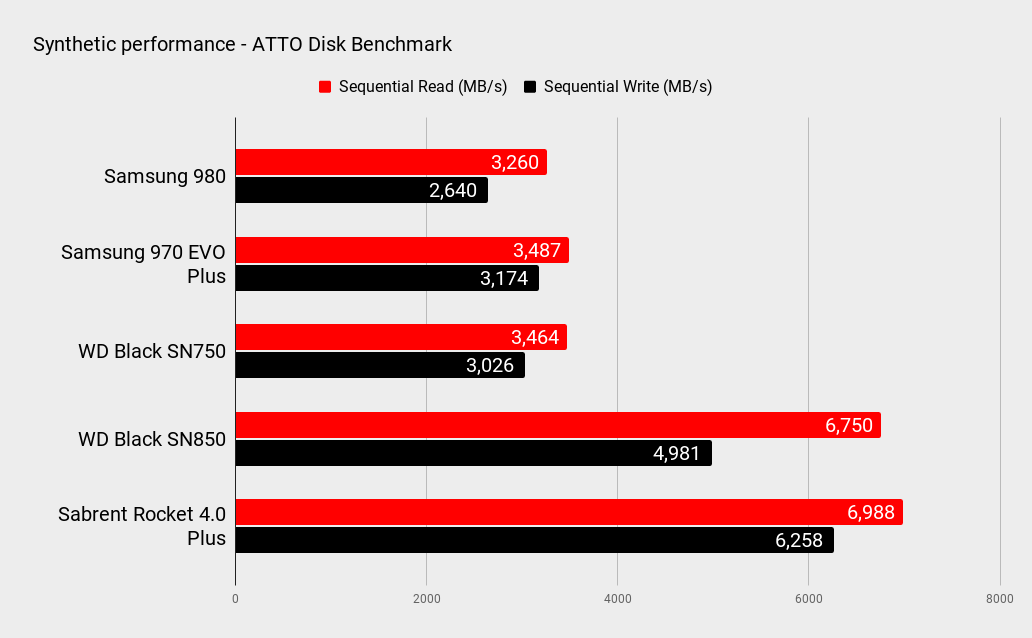
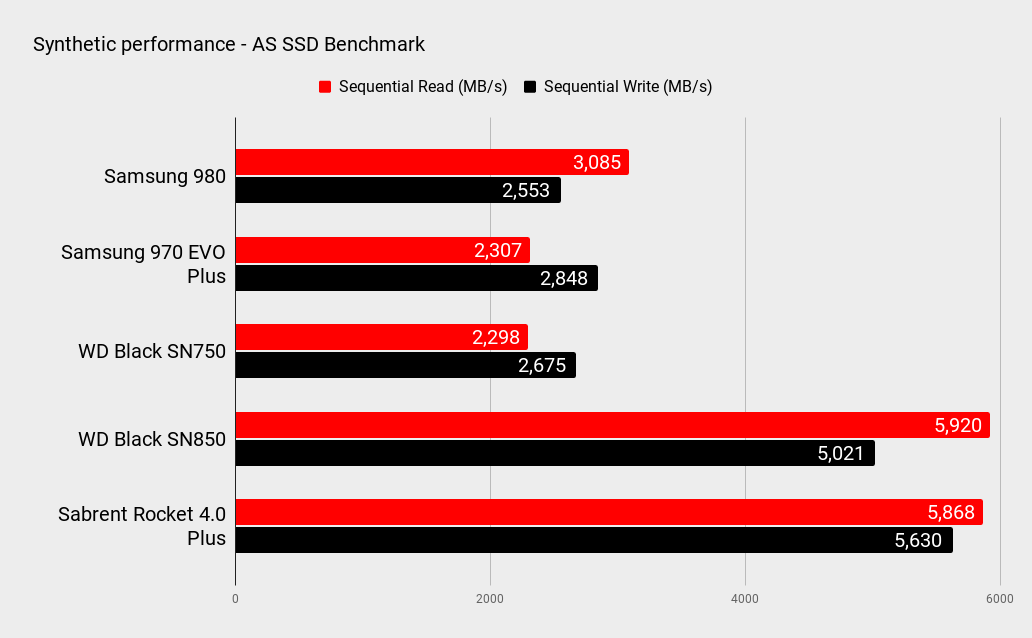
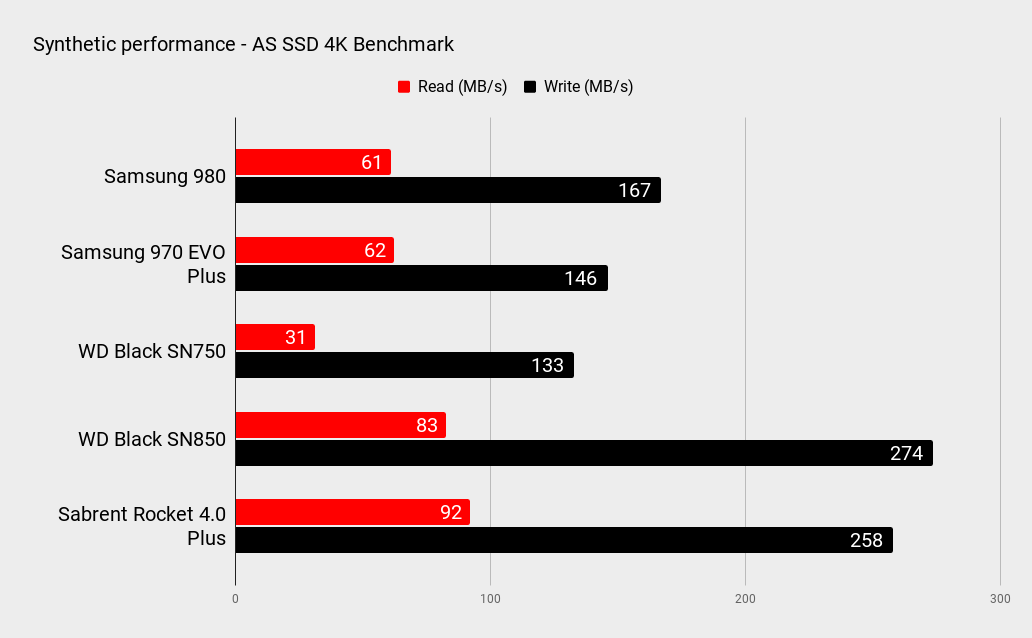
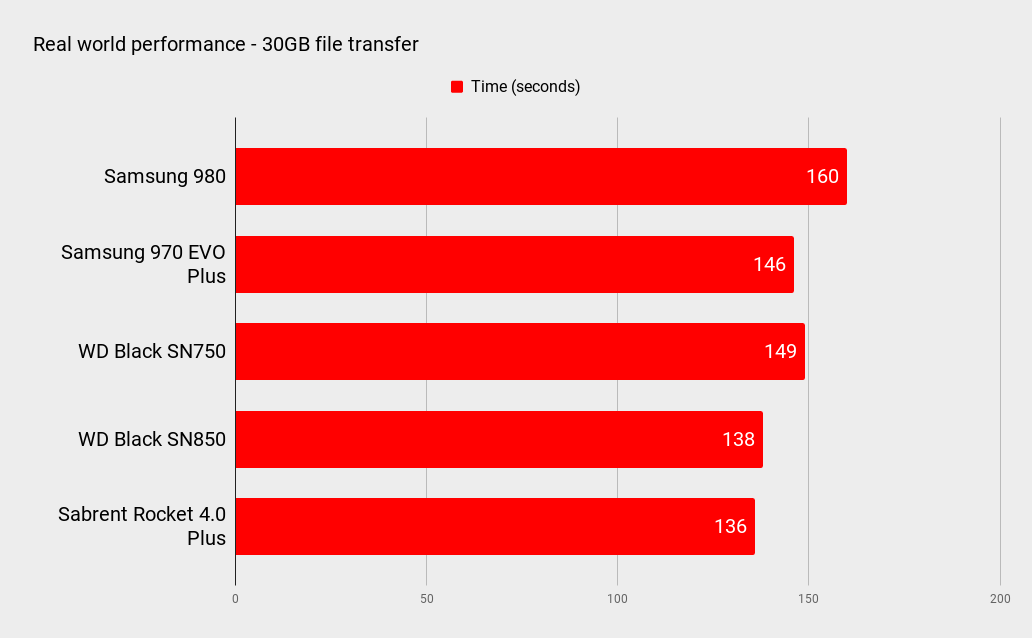
When it comes to performance, the Samsung 980 is a flake of a tricky one, simply because IT's a new PCIe 3.0 screw an era of PCIe 4.0 drives. While there's clearly still a massive market for what is effectively last-gen SSDs, this month sees the debut of Intel's Garden rocket Lake, which has PCIe 4.0 backing on the positives column. Basically, if you're superficial to upgrade in the near future, I'd advocate almost PCIe 4.0 drives over the Samsung 980 for that reasonableness only. They'rhenium backwards congruous, and will be there when you do upgrade to a amply tractable PCIe 4.0 platform.
Old school platform aside, the public presentation connected offer here is perfectly unimpeachable. There's nothing really exciting to observe, but nothing terribly wrong either. The writes can be on the uninteresting English, managing just 2,640MB/s in ATTO and 2,553MB/s in the Eastern Samoa SSD sequential test. This lags behind other PCIe 3.0 drives, including the Samsung 970 EVO, only not by a tremendous amount. And the Samsung 980 claws this deficit back in the 4K tests nicely—this will make a great fast OS drive.
The real-world tests are a little more telling though, with the 30GB folder change taking 2 proceedings and 40 seconds to full-blown, some 14 seconds slower than the 970 EVO, and 11 seconds behind the WD SN750. The Final Fantasy XIV stake loading benchmarked took 8.358 seconds, which isn't bad for a PCIe 3.0 drive, although almost a endorse behind the fastest drives KO'd there.
Overall, the Samsung 980 mostly achieves what it sets out to do. It's a bit along the irksome side occasionally, particularly when it comes to the writes, but it's in the right ballpark. The problem is more to make out with the pricing. The likes of the Samsung 970 EVO and Horse opera Digital SN750 have the butt on over in several tests, and right now there isn't a lot of difference of opinion in footing of pricing—you can pick up the Samsung 970 Evo from $142 and the WD SN750 costs $135.
If you're still rocking an Intel machine and need a new M.2 push on, then this is emphatically worth considering. Depending on what's natural event with the price at the very moment you're buying, this could be the best option—and you bang you'rhenium in safe hands with Samsung. Information technology just feels like it doesn't really change the market much, given thither are mess of SSDs already out there that do pretty much exactly what this does.
The real question you have to ask yourself here is: When are you going away to upgrade next, and do you want accession to next-gen game loading when that appears? Given by this time next month both Intel and AMD platforms are going to cost supporting PCIe 4.0 SSDs, it seems a strange sentence to release a last-gen drive. Especially one that doesn't really stand call at any particular fashio.
Samsung 980 1TB
Thither's nothing inherently vicious with Samsung's latest SSD, but it's hard to start out excited about PCIe 3.0 performance in 2021.

Alan has been writing about PC technical school since in front 3D graphics cards existed, and still vividly recalls having to fight with Microsoft disk operating system just to buzz off games to load. He fondly remembers the killer combo of a Matrox Millenium and 3dfx Voodoo, and seeing Lara Croft in 3D first. He's very glad hardware has advanced atomic number 3 so much American Samoa it has though, and is particularly happy when putting the latest M.2 NVMe SSDs, AMD processors, and laptops through their paces. He has a lasting Charming: The Assembly obsession but limits this to MTG Arena these days.

Source: https://www.pcgamer.com/samsung-980-1tb-ssd-review/
Posted by: alexanderanceent.blogspot.com
0 Response to "Samsung 980 SSD 1TB review | PC Gamer - alexanderanceent"
Post a Comment